What a Decade of Competition Taught Me About Practice
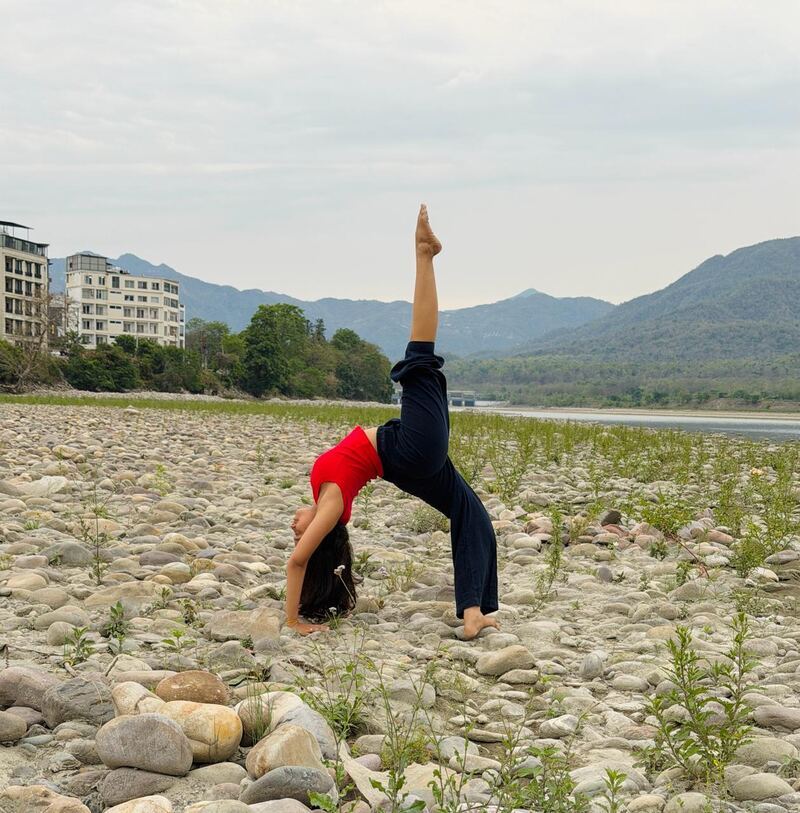
I was eleven years old at my first National Yoga Championship. I remember the size of the hall, the sound of hundreds of bare feet on the floor, and the exact moment I realised that everyone there had practised as hard as I had. Ten years later — after national medals, a Top 4 finish at the 37th National Games, and now sitting on the other side of the table as a State-Level Judge — these are the lessons that actually stayed.
1. The pose is the exam, not the syllabus
Competitive yogasana is scored on precision — angles, stillness, breath control, composure. But you don't build those on stage; you build them in the thousand unremarkable mornings before. When students ask me how to "get" a difficult pose, my honest answer is that you don't get the pose. You build the body and the patience, and one day the pose is simply there.
Discipline is remembering what you wanted long after the mood you wanted it in has passed.
2. Losing teaches more, but only if you let it
I placed 5th at the 42nd National Championship in 2017. For a fifteen-year-old, missing the podium felt like the end of everything. It took me years to see that the losses were doing the real coaching — they showed me exactly where my preparation was thinner than my ambition. Now, when I train young athletes, I watch how they lose more carefully than how they win. My U-11 students won State gold in 2024, and I am proudest of how they handled the rounds that didn't go their way.
3. Composure is a skill, not a personality trait
On stage, your heart rate is high, the judges are silent, and you must fold into stillness anyway. I learnt to treat calmness as something you train — through breath, through rehearsal, through deliberately practising under pressure. This is the same skill I now teach anxious beginners and corporate teams. The stage changes; the physiology doesn't.
4. Judging changed how I teach
Sitting as a judge for the Yogasana Sports Association of Goa, I see a hundred versions of the same asana in a day. What separates the best is never flexibility — it is clarity. They know exactly where their body is in space and exactly why. That clarity is trainable at every level, and it is what I look for in my school classes long before I look for depth in a backbend.
What this means if you never compete
Most of my students will never step on a competition stage, and they don't need to. But the athlete's toolkit — patient repetition, honest self-assessment, trained calm — belongs to everyone. Ten minutes of sincere daily practice will change more in a year than an occasional heroic hour ever will.
A decade in, I still begin every practice the same way I did at eleven: sit, breathe, begin. The mat has never once asked me for a medal.